Monday, September 26, 2016

Art_Around the World

Fourth graders will travel the world in art this year! They will look at art exemplars, media and methods from Africa, Latin America, and Asia.  One of their first activities was to draw a world map from memory, what they knew or though they knew. Here are some examples: 


Their first major project is called "I Am the World" where they express themselves (as individuals, members of different groups, and citizens of the world) using imagery.  They made a chart to help them collect imagery, they looked up images up on CC Search and explored an app called "Beautiful Planet".  They also wrote a draft of an "I am" poem. 


The girls also started a list of things they are passionate about. All this ideation will turn into a collage of imagery that represents their worlds - a great starting point from which to travel beyond! 


Friday, September 23, 2016

Schools Around the World

In Fourth Grade we have already started our focus on global studies.  Over the summer, the girls all read a short biography about the young, Nobel Peace Prize winning, Malala Yousafzai. In the first week of school, our discussion of her amazing story and her commitment to education led to an even bigger discussion about schools and education around the world. For the last three weeks, the girls have been working in small groups to learn more about education in other countries.  After individually researching countries and writing short reports, the girls came together in their groups to create posters that illustrate the lives of school children in each continent.  This week, we have ended this unit by watching a documentary that chronicles the journeys of four young children around the world on their walks to school.  Chat with your daughter about what she has learned in our studies so far, and check out some photos and the movie trailer below!


Movie Trailer for Documentary:


Thursday, September 22, 2016

Music: Folk Dance and Community

The girls loved learning a Russian folk dance, "Sasha!"  After learning the dance in partners, they worked in groups to re-choreograph the dance.  There are many more options with 4-6 people than there are with 2!

Here are a few!


Tuesday, May 31, 2016

Summer Reading for Rising Fourth Graders


Here is a link to summer reading information:


http://www.brynmawrschool.org/Page/Academics/Lower-School/Peggy-Bessent-Library/Fourth-Grade-Summer-Reading

Happy Summer!

Tuesday, May 17, 2016

Art: Floral Still Life

Third graders are completing floral still lives from observation. They examined how an object changes depending on one's perspective, and how color changes depending on the light. Girls built on their knowledge of color from second grade, using "color opposites" (dark-light, warm-cool, bright-dull) to recreate observed colors in chalk pastel. Students looked to master works to plan a background that would enhance their flowers in some way. Throughout the drawing, girls used iPads to document their drawing process. 


Monday, April 25, 2016

Tinker and Techxploration

The girls enjoyed the Lower School Tinker and Techxploration Fair on April 18th.  The girls had an opportunity to explore and tinker with 10 of the latest technology innovations and gadgets. 
 
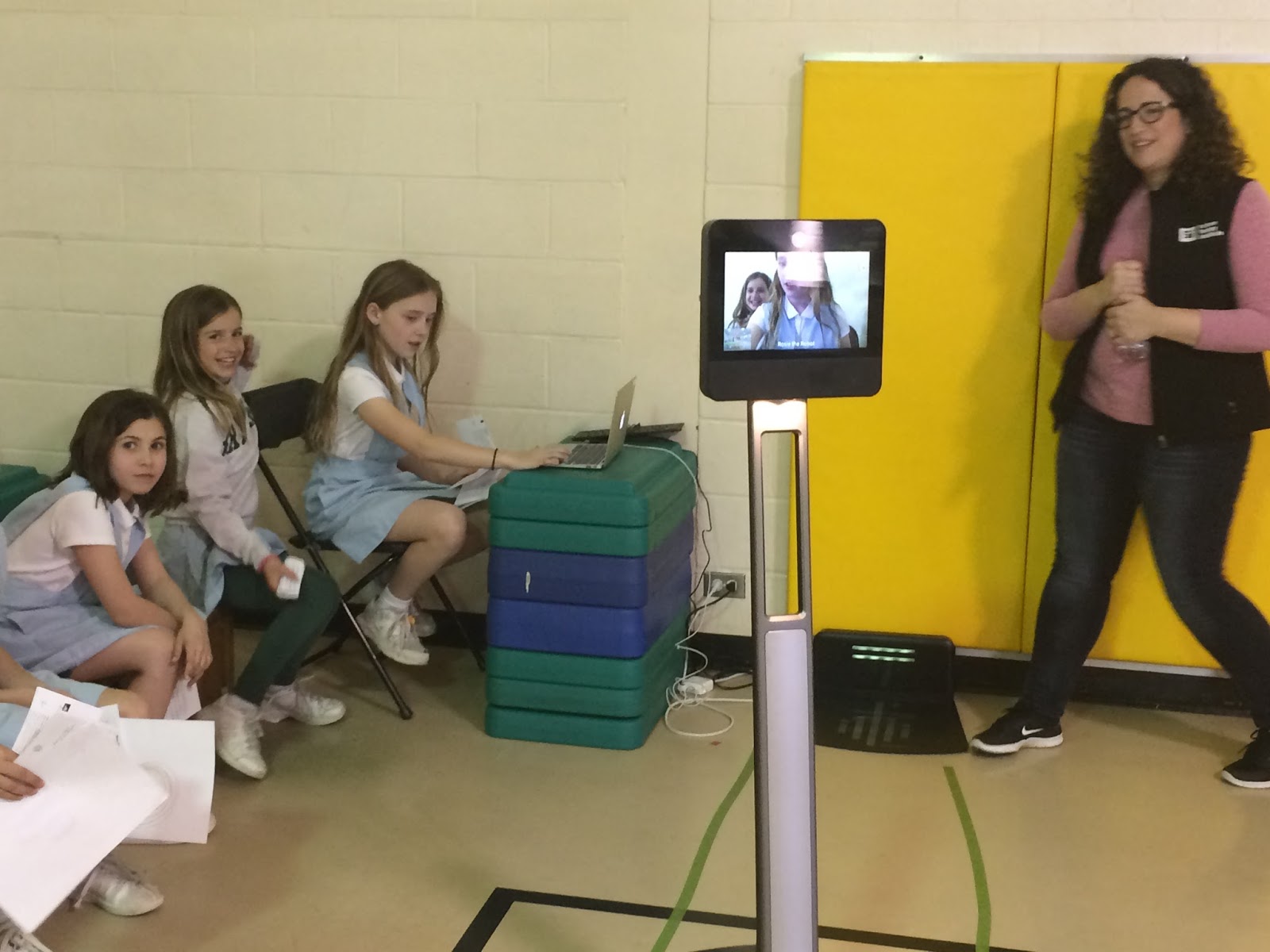
The Beam is an experimental telepresence robot. It lets you move around and talk to people, even when you’re not with them in person. The Beam uses WiFi, cameras and sensors to move around.

Google Cardboard is a virtual reality set of glasses. What’s virtual reality? It’s a way to experience something through our computers that doesn’t really exist.
    
You can connect the MaKey MaKey to a computer and then to just about anything.
  
Makeup Genius uses augmented reality code to put makeup on your face!

 
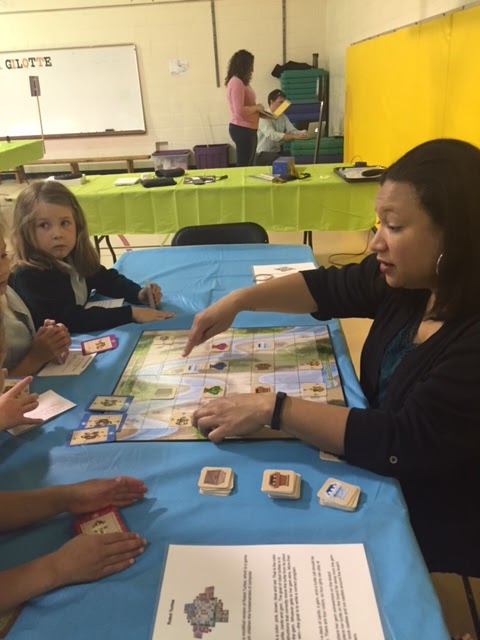
Robot turtles is a super fun game that will also teach you how to think like a computer scientist.
  
Drones are machines that fly themselves.
   
Alexa is an artificially intelligent bot that you can have a conversation with.

  
Leap Motion allows you to control a computer through motion rather than a keyboard or mouse, that’s called a “gestural interface.”

   
The Spirograph was created by a mathematician in the late 1800s. He used it to calculate the area of curves. But a British engineer soon realized that the Spirograph could also be used to create really pretty drawings.